

Knowing how to ship awkward or irregular parcels isn’t easy either for senders or for most carriers. Not everything fits neatly into a box. Whether it’s a hefty engine component, a uniquely shaped piece of industrial equipment, or an over-length item straight off the factory floor you still need it delivered reliably, quickly and without compromise. Find out what you need to include in your shipping plans when dealing with heavy, oversized and odd-shaped goods.
What counts as awkward and irregular parcels?
Within the delivery world you have standard parcel networks, pallet networks and freight networks. Pallet and freight networks will often handle large, heavy and oversized items but have bigger costs attached. Parcel networks take typical sizes and dimensions (dims). So they set the standard for what is awkward and irregular. Pallet networks exclusively handle goods package onto pallets which are moved by forklift vehicles while freight networks handle loose, boxed and bulky packaged items.
The top UK parcel companies typically have MAX weights between 15kg – 30kg, MAX length of 61cm – 175cm and overall MAX size rules that don’t exceed 120cm x 60cm x 60cm. Any items over these dimensions are oversized, awkward and irregular. Parcel companies will have limits and won’t deliver over certain sizes and weights.
Some carriers will not go over certain volumetric weights, this is a calculation to see how much space your items will take up in cubic centimetre blocks. You will need your items’ quantity, height, weight and length details to calculate the volumetric weight. Click here to use our Volumetric Weight Calculator.
If you make or sell big and bulky products then you are very likely to fall into the awkward and irregular category. Think furniture, gym equipment, garden equipment, sculptures, artwork or construction and home-ware materials like piping, blinds and panelling. It’s not simply that these goods are large the shape may not fit neatly into a box, protruding parts and fragile materials also land items into the irregular category.
Measuring Up
You need to know your products inside and out. Start with accurate measurements on length, width, height at the packages tallest or widest points in cm. Remember to consider any parts that may stick out such as handles, furniture legs or uneven edges as these will need extra protection. Then measure total weight and volumetric weight in kilograms. Finally look at how the products are balanced in their packaging. You will need to take this into consideration when thinking about how it will loaded and unloaded into vehicles and how it may move on the journey.
Packaging styles
For heavy, oversized and odd-shaped goods your packaging options can be boiled down to one of the following;
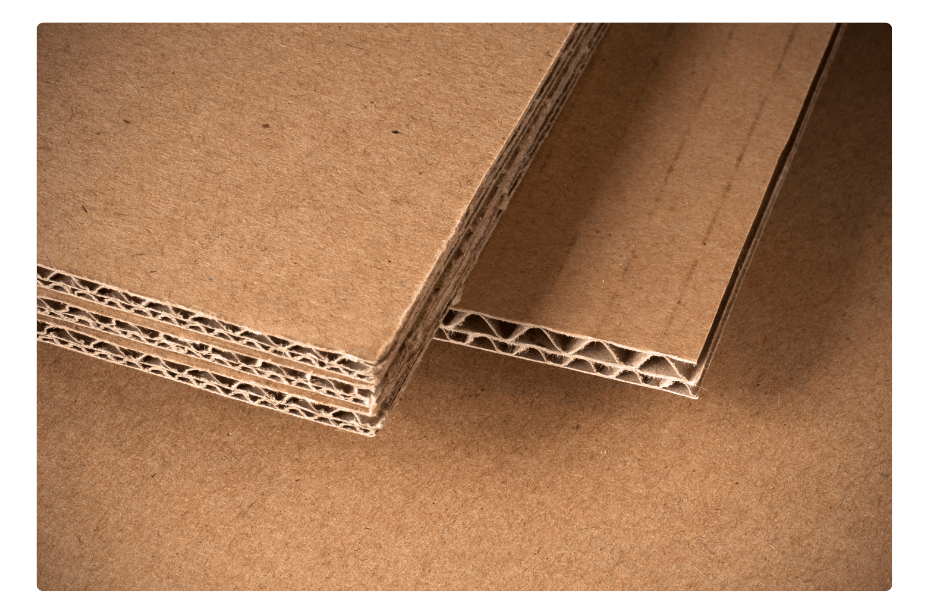
- Boxed – For items that are more lightweight you can consider double-walled boxes
- Custom crates – For fragile items custom wooden crates are available to purchase
- Pallets – For heavier items pallets are useful but you do have to have access to forklift vehicles to move these and items will need to be shrink-wrapped
Added protection
The outer box is not where the packaging story ends. Further protection should be taken into as it can mean the difference between a safe arrival and damaged returns.
- Void fillers like high density foam padding help prevent movement inside the packaging. Foam inserts can be cut to custom shapes for irregular shaped items to fill empty spaces and reduce risk of movement during transport and handling.
- Heavy duty bubble wrap is a common extra layer that can be applied to items. Wrap fragile areas separately and for larger items choose the with larger air cells.
- Edge and corner protectors can come in a variety of materials including cardboard, foam, rubber and heavy-duty plastics. Custom protectors can be made from these materials to fit your goods.
- Shrink-wrapping protects is loose plastic wrapping that tightens when heated, this protects your goods from moisture and dirt.
- Stretch-wrapping is a tight plastic layer wrapped around your goods to keep them stable, often used on pallets.
- Strapping can be added to secure your goods and stop movement during transport. Make sure the areas where straps will be applied have suitable padding to prevent damage.
Common mistakes to avoid
Inadequate packaging where your items are simply not protected from impact, moisture and other elements or over-packing into larger boxes with excess room are often the main culprits for item damage. Remember to measure your item correctly, double check your dimensions and pack to protect your goods with balance and weak points in mind.
Choose parcel, pallet, freight or YOVOY
Size and weight limits
Parcel networks have size and weight limits mentioned earlier whilst pallet and freight can handle larger and heavier items they are often through networks that require contracts and long-term agreements. A more flexible way to send irregular goods is the YOVOY portal, a self-service delivery portal that connects you to dedicated drivers.
Standard vs irregular shapes
The shape of your items matters just as much as the weight. Longer items will fall outside of accepted parcel network limits. Goods with protruding parts or fragile sections will be exposed to damage on automated conveyor systems often used in parcel networks.
Understanding costs and surcharges
Shipping costs will usually start with a base rate charge with additional charges sometimes called surcharges. Depending on the courier or carrier you could be landed with fees for anything long-length items, Business-to-customer (B2C) deliveries, remote location deliveries, oversized item fee, fuel surcharge or manual handling fee. This wouldn’t apply to YOVOY as you either set the price or accept bids from drivers to have your items transported.
Technology available
When choosing between these different shipping networks you have to consider what tech you can access. While parcel networks may have live tracking you might have to discount them based on the size and weight limits previously mentioned. Live tracking or real-time tracking follows your delivery along it’s journey giving you up-to-date info on where your items are. Pallet networks do not offer real-time tracking but operate on a scan at touch-points basis when reaching depots and hubs.
While some types of tech are useful for large or irregularly-shaped goods some tech is not. Automated conveyor belts are not built for oversized, fragile or non-standard items which can lead to damage.
Online booking systems simplify arranging oversized shipments allowing you to save time and compare prices.
Proof of delivery is the confirmation that your goods got the to right destination and person. Often parcel networks and with YOVOY you get electronic proof of delivery that provides photographic proof with time, location and date information. Pallet networks and some traditional freight carriers still use a physical signature.
Labelling
Standard or customer labels are incredibly helpful for moving irregular items. They give clear instructions to everyone involved in moving your goods.
- Fragility: This includes your classic fragile label as well as ‘Do Not Stack’, ‘Handle with care’, ‘Moisture-sensitive’ and ‘temperature-sensitive’ labels
- Weight:’ Heavy-lift’, ‘Team-lift’, ‘2-Person lift’, Specific weight labels e.g. ‘Package Weighs 80KG’
- Direction: ‘This way up’, ‘Keep upright’ labels
- Value: ‘High value item’, ‘Do not leave unattended’ highlight items need added security
- Custom: Senders can create custom labels that speak to handling, delivery and even installation instructions, the possibilities are endless.
Delivery Expectations
What do your customers expect from their delivery? Have you explained that in your communications to them and on your website? The information you have detailed there is your delivery promise to your customer. You should include details on how items will be handled, if specialist vehicles are involved, who delivery partners are and set realistic timings for delivery in your delivery promise.
What kind of services are included in your delivery? Consider if items will be dropped kerbside or inside within a room-of-choice. Most will only provide kerbside as standard, check with your carrier. Consider if you can book custom time-slots like you can with YOVOY or if assembly of items and removal of packaging are a priority that is available with some freight network carriers.
Once you have this details worked out inform your customer at every opportunity so they are aware and are less likely to be disappointed.
Remember M.I.L.E.S
Measure your items correctly
Inspect packaging and protection
Labels clearly to help protect your goods
Expectations should be realistic
Select the right network
